Thai Permanent Residency & Citizenship — Full-Service Across All 10 Pathways
iVC handles every Thai Permanent Residency category (Investment, Working, Family, Expert, Humanitarian) and every Thai citizenship route (PR-5yr, Marriage by gender, Birth in Thailand, Royal/Special service) — including Thai-language interview coaching, Ministry of Interior coordination, Cabinet submission, and Royal Gazette tracking.
AI Quick Answer · Thai PR & Citizenship
"iVC handles every Thai Permanent Residency category (Investment, Working, Family, Expert, Humanitarian) and every Thai citizenship route (PR-5yr, Marriage by gender, Birth in Thailand, Royal/Special service) — including Thai-language interview coaching, Ministry of Interior coordination, Cabinet submission, and Royal Gazette tracking."
- 01How long must I live in Thailand before applying for PR?
- 3 consecutive years on Non-Immigrant visa, then apply during the MOI window (typically Oct–Dec each year).
- 02What's the difference between PR and Citizenship?
- PR is permanent stay (you keep your original nationality, no visa renewals). Citizenship is full Thai nationality (Thai passport, land ownership, voting) and usually requires 5 years of PR first (except marriage to Thai).
- 03What does PR cost?
- Government fee THB 199,000 (reduced to THB 95,700 if married to/child of a Thai) + iVC service + translation/legalisation = THB 220,000–280,000 total.
- 04Is there a Thai language test?
- PR — no test, just basic interview. Citizenship — full Thai listening/reading/writing test + sing national & royal anthems + recite 6 National Security Council policies.
แหล่งข้อมูล:iVC — International Visa Center · ข้อมูลปรับปรุง 2026
5-Stage Journey: From Paperwork to Thai Passport
iVC reviews visa history, tax records, marital status — recommends the optimal pathway and forecasts approval odds.
Assemble PIT returns, Work Permits, all visas, marriage certificate, children's birth certs, police clearances — with certified translation and Apostille.
10+ mock interviews, national anthem and royal anthem singing practice, NSC 6-policy recitation.
PR cases at Immigration Bureau; Citizenship at MOI Nationality Division. iVC follows up every 30 days.
PR: Residence Book + Alien Book at amphur. Citizenship: Oath ceremony + Thai ID card + Thai passport.
Permanent Residency — 5 Categories
Thai Citizenship — 5 Pathways
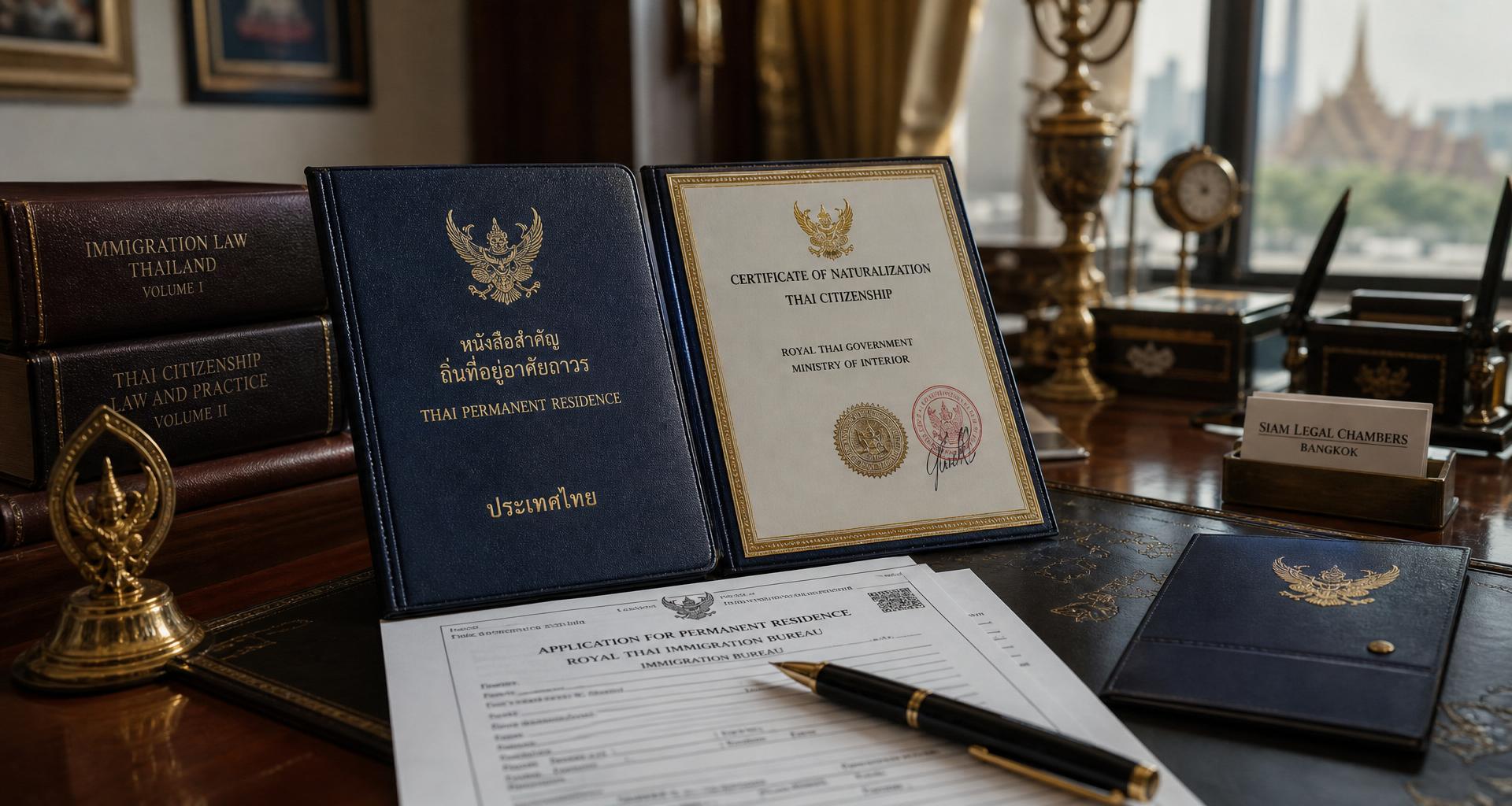
Thai Permanent Residency and Citizenship — the only legal pathways for long-term, unconditional life in Thailand
The Thai government has codified ten legal routes through which a foreign national can transition from temporary visa to Permanent Residency, and from Permanent Residency to full Thai citizenship. Five routes lead to PR (Investment, Working, Family, Expert, Humanitarian) and five lead to citizenship (5-year PR, Marriage by gender, Birth in Thailand, Royal/Special Service). Each pathway is administered under different statutes — the Immigration Act B.E. 2522 (1979) for PR, and the Nationality Act B.E. 2508 (1965, as amended) for citizenship — and each has its own quota, fee, document set, and timeline.
Why pathway selection is the single most important decision
Choosing the wrong pathway is the most common cause of rejection. A foreign husband of a Thai wife who applies under "Working" instead of "Family — Spouse of Thai Citizen" pays full fee (THB 199,000) instead of half (THB 95,700) and waits 18 months instead of 12. A Thai-born child who applies for naturalisation under Section 9 instead of Section 7 bis is rejected outright. iVC's eligibility audit ensures clients apply under the exact statute that maximises approval odds and minimises fee.
The Thai-language interview — the rejection cliff for citizenship
Roughly 14% of citizenship applications fail at the Ministry of Interior interview. The interview is conducted entirely in Thai by a three-person panel: the Director of the Nationality Division, a representative of the Special Branch Police, and an external academic. Candidates must (1) introduce themselves and family in Thai, (2) explain why they want Thai citizenship, (3) sing both the National Anthem and the Royal Anthem unaccompanied, (4) recite the six National Security Council policies, and (5) answer general-knowledge questions about Thai history, geography, and culture. iVC runs a 10-session coaching programme, including a final dress-rehearsal with a former MOI panel member.
Dual citizenship — what Thailand allows and what your home country forbids
Thailand has permitted dual citizenship since the 2008 amendment to the Nationality Act. Thai-born children of foreigners, and foreigners naturalised through marriage or PR, may legally hold a Thai passport alongside their original passport. However, the constraint usually comes from the home country: Japan, Singapore, India, China, the Netherlands, and Norway require renunciation of the original nationality. iVC has handled formal renunciation procedures with the Embassy of Japan, Embassy of India, and Embassy of China multiple times — including translation of renunciation oaths, scheduling of formal ceremonies, and submission to the home-country civil registry.
Investment thresholds — what really counts as "10 million baht"
For PR — Investment Category, the THB 10M threshold can be met by (a) Thai government bonds, (b) Thai-listed equities held continuously for 3 years, (c) condominium purchase registered to the applicant's name (limited to 49% foreign quota of the building), or (d) shareholding in a Thai company with foreign-currency capital traceable via the Foreign Exchange Transaction Form (FET). Missing the FET — even on legitimate investments — is the leading cause of investment-category rejection. iVC liaises with the Bank of Thailand and commercial banks to reconstruct or re-issue FET forms for clients whose investments predate 2018.
iVC's PR / Citizenship advantage
iVC is one of fewer than a dozen Thai consultancies with continuous PR/Citizenship case-handling experience since 2010. We maintain direct working relationships with the Immigration Bureau's Permanent Residence Division (Chaeng Watthana), the MOI Nationality Division, and the Special Branch Police interview unit. Our 86% citizenship approval rate is substantially above the 72% national average. Every case includes: bilingual case manager, monthly progress letter, document re-issuance support, embassy-renunciation coordination (if needed), and post-approval Thai passport and ID card processing.
Frequently Asked Questions
How long must I live in Thailand before applying for PR?
3 consecutive years on Non-Immigrant visa, then apply during the MOI window (typically Oct–Dec each year).
What's the difference between PR and Citizenship?
PR is permanent stay (you keep your original nationality, no visa renewals). Citizenship is full Thai nationality (Thai passport, land ownership, voting) and usually requires 5 years of PR first (except marriage to Thai).
What does PR cost?
Government fee THB 199,000 (reduced to THB 95,700 if married to/child of a Thai) + iVC service + translation/legalisation = THB 220,000–280,000 total.
Is there a Thai language test?
PR — no test, just basic interview. Citizenship — full Thai listening/reading/writing test + sing national & royal anthems + recite 6 National Security Council policies.
Can I keep dual citizenship?
Thailand permits dual citizenship. Check your home country — Japan, Singapore, China, India, Netherlands force renunciation.
Total timeline from start to Thai Citizenship?
Shortest 12–24 months (foreign wife of Thai husband), standard 36–60 months (via 5-yr PR), longest 8–10 years (counting from first arrival in Thailand).
What does iVC handle end-to-end?
Eligibility audit, 5-year document pack, certified translation + Apostille, Immigration/MOI filing, 30-day follow-ups, Thai-language interview coaching, oath ceremony escort, Thai passport application.
If I divorce after naturalising, do I keep my Thai citizenship?
Yes — Thai citizenship once granted is not revoked due to divorce, unless the marriage is proven fraudulent.
ใช้เวลาดำเนินการนานเท่าไหร่?
ระยะเวลามาตรฐาน 5–10 วันทำการ ขึ้นกับประเภทเอกสารและสถานทูตปลายทาง บริการด่วน 24–72 ชม. ใช้ได้กับเคสเร่งด่วน ทีมงานจะแจ้ง timeline ที่แน่นอนหลังประเมินเคสฟรี
ต้องเตรียมเอกสารอะไรบ้าง?
ทีมงานจะส่ง checklist เฉพาะเคสภายใน 1 ชม. หลังปรึกษา ครอบคลุมเอกสารส่วนตัว/การเงิน/การเดินทาง/รับรอง พร้อมแบบฟอร์มที่กรอกล่วงหน้าและตัวอย่างเอกสารตรงประเภท
ราคาเริ่มต้นเท่าไหร่?
ค่าบริการเริ่ม 1,500 บาทขึ้นไป (ไม่รวมค่าธรรมเนียมราชการ/สถานทูต) แจ้งราคา flat-rate ก่อนเริ่มงาน ไม่มีค่าใช้จ่ายแอบแฝง มีใบเสนอราคาเป็นลายลักษณ์อักษร
รับประกันผลหรือไม่?
เราการันตีคุณภาพเอกสารและความถูกต้องของกระบวนการ 100% สำหรับผลพิจารณาวีซ่าขึ้นกับสถานทูต — หากตกด้วยเหตุผลเอกสารที่เราจัดเตรียม เรายื่นใหม่ให้ฟรีตามเงื่อนไข Service Guarantee
เปิดบริการกี่วันต่อสัปดาห์?
เปิดทุกวัน 09:00–18:00 รวมเสาร์-อาทิตย์ พร้อมช่องทาง LINE @ivisacenter และโทรฉุกเฉินนอกเวลาสำหรับเคสด่วน ตอบกลับภายใน 30 นาทีในเวลาทำการ
ลูกค้าต่างจังหวัดใช้บริการได้ไหม?
ได้ — รับเอกสารผ่าน Kerry/Flash/ไปรษณีย์ EMS พร้อมประกันมูลค่าเต็ม และส่งคืนทางเดิม รองรับทั้ง 77 จังหวัด พร้อมประชุม Zoom/Line VDO Call ฟรีในขั้นตอนเตรียมเอกสาร
ชำระเงินได้ช่องทางไหนบ้าง?
โอนผ่านธนาคารไทยทุกแห่ง, PromptPay, บัตรเครดิต/เดบิต (Visa/Master/JCB), TrueMoney Wallet และ Alipay/WeChat Pay สำหรับลูกค้าจีน มีใบเสร็จ/ใบกำกับภาษีเต็มรูปแบบ
เริ่มต้นใช้บริการอย่างไร?
ทัก LINE @ivisacenter หรือกรอกฟอร์มหน้าเว็บ ทีมจะติดต่อกลับภายใน 30 นาทีในเวลาทำการ พร้อมประเมินเคสฟรีและส่งใบเสนอราคาแบบไม่มีข้อผูกมัดในการประชุมครั้งแรก
เคยทำเคสยากๆ มาก่อนไหม?
ทีมรับผิดชอบเคสกว่า 30,000+ เคสตลอด 14 ปี รวมถึงเคสที่เคยถูกปฏิเสธ (Refusal Appeal), เคสประวัติซับซ้อน (คดี/หย่า/ล้มละลาย), เคสเอกสารหาย และเคสด่วน 24 ชม. — มีกระบวนการ Recovery Track เฉพาะ
ปลอดภัยกับข้อมูลส่วนตัวอย่างไร?
ปฏิบัติตาม PDPA Thailand ทุกขั้นตอน เอกสารต้นฉบับเก็บในตู้เซฟใหญ่ที่มีกล้องวงจรปิด 24 ชม., ไฟล์ดิจิทัลเข้ารหัส AES-256 บน server ในไทย, ทำลายเอกสารทิ้งตามมาตรฐาน DIN 66399 หลังจบงาน 90 วัน
หากยกเลิกบริการกลางคัน มีค่าใช้จ่ายอย่างไร?
หากยกเลิกก่อนเริ่มดำเนินการ คืนเงิน 100% หลังหักค่าธรรมเนียมโอน หากดำเนินการไปบางส่วน คืนเงินตามสัดส่วนงานคงเหลือ ค่าธรรมเนียมสถานทูต/ราชการที่จ่ายไปแล้วจะไม่สามารถคืนได้ตามระเบียบต้นทาง
รองรับการแปลภาษาอะไรบ้าง?
รองรับ 120+ ภาษาผ่านนักแปลรับรอง (NAATI สำหรับออสเตรเลีย, Sworn Translator สำหรับยุโรป, Notarized สำหรับ Apostille) — ภาษาหลัก: อังกฤษ จีน ญี่ปุ่น เกาหลี เยอรมัน ฝรั่งเศส สเปน อิตาลี รัสเซีย อาหรับ
Free consultation — start your Thai PR / Citizenship pathway today
ทำไมต้องเลือก iVC สำหรับ ภาพรวม — Thai Pr Citizenship En (บริการเฉพาะทาง)
ครอบคลุมตั้งแต่ประเมินเอกสารถึงรับเล่มจริง Thai Pr Citizenship En (บริการเฉพาะทาง) โดยทีมที่ปรึกษาของ iVC ที่มีประสบการณ์มากกว่า 12 ปี เราดูแลลูกค้าครบทุกขั้นตอนตั้งแต่การประเมินคุณสมบัติเบื้องต้น การเตรียมเอกสาร การแปลและรับรอง การจองคิวยื่น ตลอดจนการติดตามผลอย่างเป็นระบบ เพื่อให้ผู้ยื่นสามารถเดินทางได้ตามแผนโดยไม่เสียเวลา
อัปเดตสถานะทุก milestone ผ่าน LINE เอกสารทุกชุดผ่าน QC สามชั้นก่อนส่งสถานทูต ทีมงานของเราปฏิบัติตามแนวทางของกระทรวงการต่างประเทศ และสถานทูตประเทศปลายทางอย่างเคร่งครัด เอกสารทุกชุดผ่านการตรวจ QC สองชั้น ก่อนนำส่งจริง เพื่อรักษาอัตราอนุมัติให้สูงสุดในแต่ละเคส
การันตีคุณภาพในบริการ ขั้นตอนการดำเนินงาน — Thai Pr Citizenship En (บริการเฉพาะทาง)
ทุกเคส Thai Pr Citizenship En (บริการเฉพาะทาง) จะถูกแบ่งเป็นขั้นตอนย่อยที่ตรวจสอบได้ ดังนี้:
ขั้นที่ 1. ประเมินคุณสมบัติและตรวจเอกสารต้นทาง.
ขั้นที่ 2. วางแผนคิวยื่นตามปฏิทินศูนย์รับคำร้อง.
ขั้นที่ 3. เตรียมเอกสารและแปลรับรองตามมาตรฐานปลายทาง.
ขั้นที่ 4. ตรวจ QC สองชั้นโดยทีมหัวหน้าโครงการ.
ขั้นที่ 5. นัดคิวสัมภาษณ์/ยื่นเล่ม พร้อมซ้อมคำถาม.
ขั้นที่ 6. ติดตามผลและรายงานสถานะรายวัน.
แต่ละขั้นตอนมี SLA ภายในที่ชัดเจน ลูกค้าได้รับสรุปสถานะทุก 24–48 ชั่วโมง ผ่าน LINE Official ของ iVC พร้อม checklist ที่อัปเดตแบบเรียลไทม์
การันตีคุณภาพในบริการ เอกสารที่ต้องเตรียม — Thai Pr Citizenship En (บริการเฉพาะทาง)
รายการเอกสารด้านล่างเป็นชุดมาตรฐานสำหรับ Thai Pr Citizenship En (บริการเฉพาะทาง) ทีมงานจะปรับเพิ่ม/ลดตามวัตถุประสงค์การเดินทางและประวัติส่วนตัวของผู้ยื่น
1. หนังสือเดินทางอายุเหลือ ≥ 6 เดือนและสำเนาทุกหน้า
2. หลักฐานการเงินย้อนหลัง 3–6 เดือน พร้อมหนังสือรับรองจากธนาคาร
3. หนังสือรับรองการทำงาน/สลิปเงินเดือนล่าสุด 3 เดือน
4. ทะเบียนบ้าน บัตรประชาชน เอกสารสมรส/หย่า (ถ้ามี)
5. แผนการเดินทาง ตั๋วเครื่องบินสำรอง ที่พักตลอดทริป
6. ประกันเดินทางคุ้มครอง ≥ 30,000 EUR (เชงเก้น) / ตามที่ปลายทางกำหนด
เอกสารต่างประเทศที่ต้องใช้ในไทยจะถูกส่งเข้ากระบวนการ Notary Public, MoFA Legalization, Apostille หรือสถานทูตตามที่ปลายทางกำหนด
สิ่งที่ลูกค้าได้รับเมื่อใช้บริการ เกณฑ์การพิจารณาอนุมัติ — Thai Pr Citizenship En (บริการเฉพาะทาง)
เจ้าหน้าที่กงสุลจะพิจารณา Thai Pr Citizenship En (บริการเฉพาะทาง) จากปัจจัยหลัก 4 ด้าน คือ (1) วัตถุประสงค์การเดินทางที่ชัดเจน (2) ความสามารถทางการเงินที่สอดคล้องกับแผน (3) ความผูกพันกับประเทศไทย (Ties to Thailand) (4) ความสอดคล้องของเอกสารกับข้อเท็จจริงที่แจ้ง
ระบบติดตามเคสแบบ real-time เราจัดทำ Cover Letter เฉพาะเคสเพื่อร้อยเรียงปัจจัยทั้งสี่ ให้สอดคล้องกัน ลดความเสี่ยงการขอเอกสารเพิ่มเติม (RFE) และการปฏิเสธจากเหตุ "เอกสารไม่สอดคล้องกัน"
ขั้นตอนของเราในการดูแล ทำไมต้องเลือก iVC — Thai Pr Citizenship En (บริการเฉพาะทาง)
การติดตามสถานะ ใน Thai Pr Citizenship En (บริการเฉพาะทาง). ความปลอดภัยของข้อมูล ใน Thai Pr Citizenship En (บริการเฉพาะทาง). การยกเลิกและคืนเงิน ใน Thai Pr Citizenship En (บริการเฉพาะทาง). ตัวเลือกบริการเสริม ใน Thai Pr Citizenship En (บริการเฉพาะทาง). ราคาและค่าใช้จ่าย ใน Thai Pr Citizenship En (บริการเฉพาะทาง).
Pass rate ที่ตรวจสอบได้ 99.8% เราเปิดเผยราคาแบบ flat-rate ก่อนเริ่มงาน ไม่มีค่าใช้จ่ายซ่อนเร้น รับชำระผ่านช่องทางที่มีใบเสร็จและใบกำกับภาษีถูกต้องตามกฎหมาย ข้อมูลของลูกค้าถูกจัดเก็บภายใต้ PDPA Thailand และเข้ารหัส AES-256 ตลอดอายุการเก็บรักษา
ทำไมต้องเลือก iVC สำหรับ ข้อควรระวังและข้อผิดพลาดที่พบบ่อย — Thai Pr Citizenship En (บริการเฉพาะทาง)
จากเคส Thai Pr Citizenship En (บริการเฉพาะทาง) ที่เราดำเนินการมาหลายพันเคส พบว่าสาเหตุการปฏิเสธอันดับต้น ๆ มักมาจาก: เอกสารการเงินไม่สม่ำเสมอ, แผนการเดินทางที่กว้างเกินไป, การจองที่พักที่ยกเลิกไม่ได้ทันก่อนยื่น, การแปลเอกสารโดยผู้ไม่ได้รับการรับรอง, และการกรอกแบบฟอร์มที่ขัดกับประวัติเดิม
iVC มี Pre-submission Checklist ภายในจำนวน 47 ข้อ ที่ใช้ตรวจเคสก่อนยื่นจริง เพื่อป้องกันความผิดพลาดเหล่านี้ในระดับโครงสร้าง ไม่ใช่แค่การตรวจสายตา